

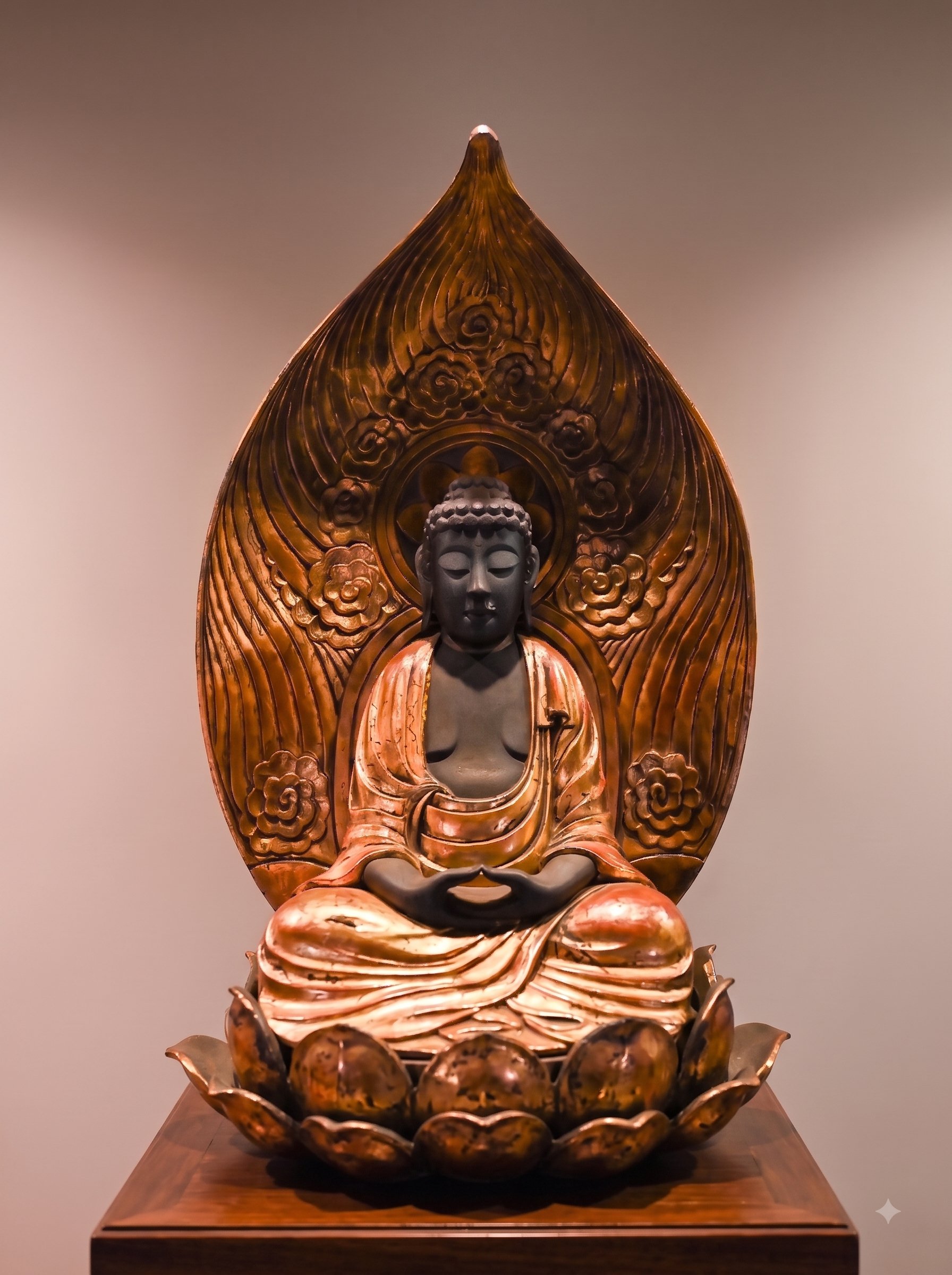
Soto Zen is one of the traditional schools of Japanese Buddhism, with zazen (seated meditation) at the very foundation of its teaching. Founded in the Kamakura period, it is today one of the largest Buddhist schools in Japan, with approximately 14,000 temples throughout the country.
Soto Zen honors two great founding teachers: Dogen Zenji, who laid the foundation of the teaching, and Keizan Zenji, who spread it widely throughout Japan. Dogen Zenji brought from China to Japan the authentic Dharma that had been handed down from the Buddha Shakyamuni through generations of monks, and founded Daihonzan Eiheiji in present-day Fukui Prefecture. Keizan Zenji later spread the teaching in a way that was closer to people’s daily lives, and founded Daihonzan Sojiji in what is now Yokohama, Kanagawa Prefecture. Soto Zen reveres these two temples as its “Two Head Temples,” the foundation of its faith.
The heart of the teaching can be summed up in the phrase shikantaza, meaning “just sitting.” Unlike some other Zen schools, Soto Zen does not seek awakening by working through koans given by a teacher. Instead, it values sitting while letting go even of the goal of attaining enlightenment or of any reward. One simply sits quietly facing a wall, harmonizing body and mind with no particular aim. Soto Zen cherishes the teaching of shusho ichinyo, “practice and realization are one”: the very form of sitting in zazen is already the form of the Buddha, and is itself awakening.
Moreover, Soto Zen does not regard zazen alone as special practice. Dogen Zenji taught that all of everyday life is practice: walking, standing, sitting and lying down (gyo-ju-za-ga), as well as cooking and receiving food, cleaning to purify one’s surroundings, and even washing one’s face. Practicing the Buddha Way does not mean doing something special in a special place; it means carrying out each ordinary act here and now with care, and living wholeheartedly.
In today’s busy world overflowing with information, the Soto Zen teachings of “simply sitting quietly and facing oneself” and “cherishing ordinary daily life” continue to be a source of support for many people, as practical wisdom for resetting the mind and living with calm.